Complementary Feeding After 6 Months
The Complete Guide to Introducing Solids for Indian Families
Pediatrician | Certified in Nutrition
Certified through national and international programs in nutrition, infant & child feeding including Solid Starts Pro and lactation counselling for expectant mothers.
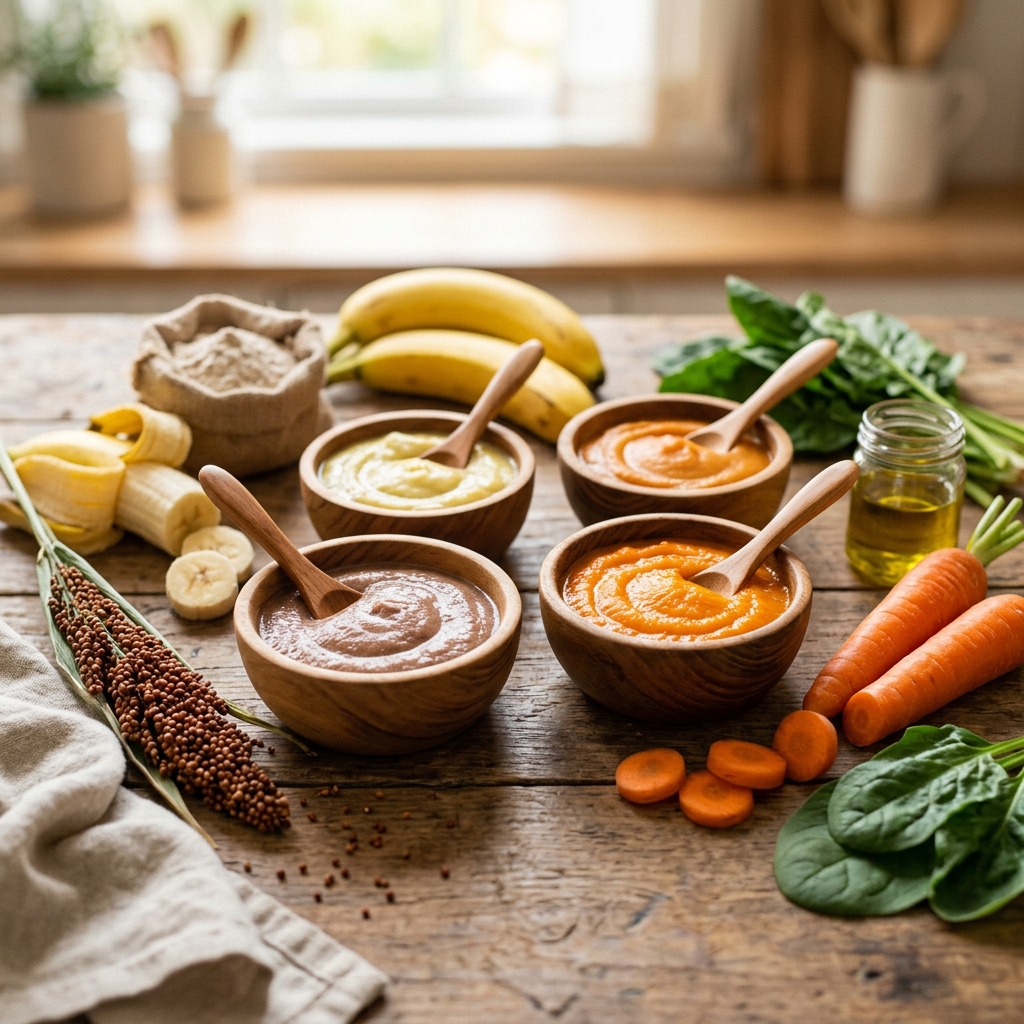
After 6 completed months, breast milk alone is no longer enough to meet a baby's growing nutritional needs. Nutritious, home-cooked foods should be introduced alongside continued breastfeeding. This is called complementary feeding.
Understanding Complementary Feeding
After 6 completed months, breast milk alone is no longer enough to meet a baby's growing nutritional needs. Nutritious, home-cooked foods should be introduced alongside continued breastfeeding. This process of gradually expanding your baby's diet while continuing milk feeding is called complementary feeding.
Complementary feeding is not about replacing breast milk immediately—it is about filling the nutritional gap as your infant grows rapidly during their first year.
The First 1,000 Days Milestone
The first 1,000 days, spanning 270 days of pregnancy and the first 2 years after birth, are a critical window for your baby's physical growth, brain development, and lifelong health foundation.
Good nutrition during this period helps prevent growth faltering, supports immune function, and lays down healthy eating patterns that persist into adulthood.
Why is 6 Months an Important Milestone?
At around 6 months, your baby's nutritional needs (especially for iron, zinc, and energy) begin to exceed what breast milk or formula alone can provide.
It is also a period of rapid sensory and motor learning. Babies are naturally curious about new tastes, smells, and textures. The 6–12 month period represents an ideal developmental window to introduce a rich variety of nutritious foods before picky eating patterns take root.
Recommended 6 Food Groups for Indian Infants
Examples: Ragi, rice, oats, broken wheat (dalia), millets
Provides steady energy, B-vitamins, and easy-to-digest carbohydrates.
Examples: Yellow moong dal, masoor dal, chickpeas (pasted)
Essential plant-based protein and iron for muscle and brain growth.
Examples: Mashed banana, stewed apple, boiled carrot, pumpkin, papaya
Rich in Vitamin A, Vitamin C, potassium, and protective antioxidants.
Examples: Desi ghee, butter, curd (yogurt)
Concentrated energy density and essential fatty acids for brain lipid synthesis.
Examples: Almond powder, walnut powder, roasted sesame seed powder
Healthy fats, Vitamin E, and micronutrients. Always serve finely ground.
Examples: Well-cooked egg yolk, minced fish, soft chicken puree
Highly bioavailable heme iron, zinc, and complete protein.
Key Action Steps for Parents
- 1Start with 1–2 teaspoons of single-ingredient purees once daily at 6 months.
- 2Gradually increase quantity, frequency (2–3 meals/day by 8 months), and texture (mashed, chopped).
- 3Never add salt or sugar before 12 months of age.
- 4Continue breastfeeding or formula feeding on demand alongside solids.
WHO & UNICEF Guidelines on Infant Feeding
World Health Organization (WHO) and UNICEF recommend exclusive breastfeeding for the first 6 months of life, followed by the introduction of safe, nutritionally adequate complementary foods while continuing breastfeeding up to 2 years of age or beyond.